
What Fuel Does an Aga Use?

Aga cookers can run on four main fuel types: oil, gas, electric, or LPG (liquid petroleum gas). Each fuel has different installation requirements, running costs, and practical considerations. Having removed thousands of Agas across the UK, we've seen every fuel type in every setting imaginable.
The fuel your Aga uses affects how it heats, how much it costs to run, and whether it needs a flue. Let's break down each option.
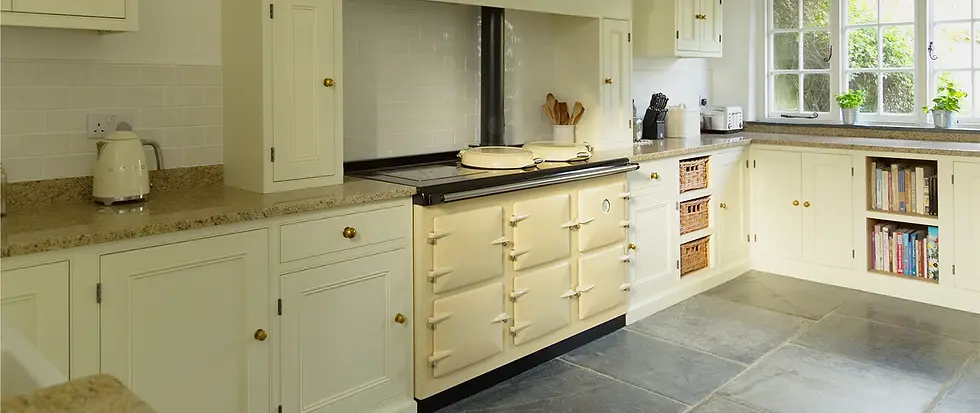
Which Fuel Types Do Agas Use?
Modern Agas come in four fuel options. Older models also used solid fuel (coal or coke), but these stopped being manufactured in the 1990s.
Oil-fired Agas burn kerosene from an external tank. They're popular in rural areas without mains gas. The burner sits behind a small door at the base of the cooker.
Gas Agas connect to your mains gas supply or can run on bottled LPG. They're the most common type in towns and cities. The gas burner provides instant, controllable heat.
Electric Agas plug into your mains electricity, typically requiring a dedicated circuit. They're the easiest to install and don't need a flue. Each hotplate and oven has its own element.
LPG Agas work exactly like gas models but run on bottled propane or butane. They're ideal for properties without mains gas where oil isn't practical.
If you're new to these cookers, you might want to read what is an Aga cooker for the full background.
How Much Fuel Does Each Type Use?
Oil Consumption
A two-oven oil Aga uses approximately 2-3 litres of kerosene per day when running continuously. Four-oven models use 3-4 litres daily. At current oil prices, that's roughly £20-40 per week.
Oil consumption varies with the weather. Your Aga burns more in winter to maintain temperature.
Gas Consumption
Gas Agas are more efficient than oil. A two-oven model uses about 2.5 cubic metres of gas daily (around 30kWh). Four-oven versions use approximately 40kWh per day.
This works out cheaper than oil in most areas. Expect £15-25 weekly for a two-oven on continuous running.
Electric Consumption
Electric Agas are the most controllable. Traditional heat-storage models use 15-20kWh daily for a two-oven. But newer models with individual controls use much less because you only heat what you need.
Running costs vary hugely with your usage pattern. Full-time operation costs £25-35 weekly at standard rates.
LPG Consumption
LPG Agas use similar amounts to mains gas models, but bottled gas costs more per unit. A 47kg propane cylinder lasts 2-3 weeks on a two-oven Aga.
Budget £30-40 weekly for continuous use. Most LPG users run their Agas part-time to manage costs.
For detailed running cost comparisons, see our post on are Agas expensive to run.
Installation Requirements by Fuel Type
Each fuel type needs different installation work. We see the results (good and bad) when we remove them.
Oil installations need:
External oil tank (minimum 1,000 litres)
Oil supply pipe to the cooker
Flue for exhaust gases
Annual servicing by OFTEC engineer
Good ventilation in the room
Gas installations need:
Gas supply pipe to cooker location
Flue for exhaust gases
Gas Safe registered installer
Annual safety checks
Room ventilation to regulations
Electric installations need:
Dedicated electrical circuit (usually 32-40 amp)
No flue required
Qualified electrician for connection
Suitable floor (they're heavy)
No special ventilation
LPG installations need:
Space for gas bottles (usually two)
Automatic changeover valve recommended
Same flue and ventilation as mains gas
Gas Safe (LPG) installer
Regular bottle changes
Which Fuel Suits Your Home?
When to Choose Oil
Oil suits rural properties with space for a tank. It's reliable and works anywhere. But you need vehicle access for deliveries and must monitor your tank level.
Many farmhouses and country homes rely on oil. The running costs are higher than gas but it's often the only option.
Oil Agas provide excellent heat to the house, especially in older properties.
When to Choose Gas
Mains gas is the most convenient fuel if you have a supply. No tanks to fill, no deliveries to arrange. Just consistent heat at reasonable cost.
Gas suits busy households. The cooker responds quickly to control changes. Modern gas Agas can switch between cooking and slumber modes.
When to Choose Electric
Electric Agas work anywhere with suitable wiring. No flue, no gas pipes, no oil tanks. They're perfect for flats or listed buildings where external changes are difficult.
The controllability is unmatched. Turn individual ovens on and off as needed. Some models even work with programmers and smart controls.
Electric suits part-time Aga users or those watching running costs. You only pay for what you use.
When to Choose LPG
LPG fills the gap when you want gas performance but lack mains supply. It's cleaner than oil and more responsive.
Choose LPG if you have good access for bottle deliveries but nowhere suitable for an oil tank. Many coastal properties use LPG to avoid oil tank corrosion.
Common Questions About Aga Fuels
Can You Convert Between Fuel Types?
Yes, but it's expensive. We often remove Agas being converted from oil to electric. The work involves changing the burner unit, controls, and sometimes internal components.
Conversions typically cost £3,000-5,000. Sometimes buying a different fuel type makes more sense. Read about converting gas Aga to electric for specifics.
Do All Fuel Types Heat Equally?
Oil and gas Agas maintain the most consistent heat. They're always ready for cooking. Electric models can take longer to reach temperature from cold but offer better control.
Heat distribution is similar across fuel types once up to temperature. The roasting oven hits the same heat whether oil or electric.
Which Fuel Is Most Reliable?
In our experience removing faulty units, electric Agas have the fewest breakdowns. No burners to service, no oil pumps to fail.
Gas comes second for reliability. Oil Agas need the most maintenance but rarely fail completely if serviced annually.
Making Your Fuel Choice
Your location often decides your fuel type. Mains gas if you have it, oil or LPG if you don't, electric if you want maximum control.
Consider your cooking patterns too. Always-on suits oil or gas. Occasional use favours electric. And remember that what Aga stands for reflects its Swedish origins where reliable heating mattered most.
Whatever fuel your Aga uses, they all cook brilliantly once you understand their quirks. The fuel just determines how that famous Aga heat arrives in your kitchen.


Comments